Rat and mouse article
The Best Rat and Mouse Traps, and Where to Put Them
Snap traps, sized right and set in the right place, do most of the work. Here's what UF/IFAS says about trap types, baits and placement for roof rats and mice.
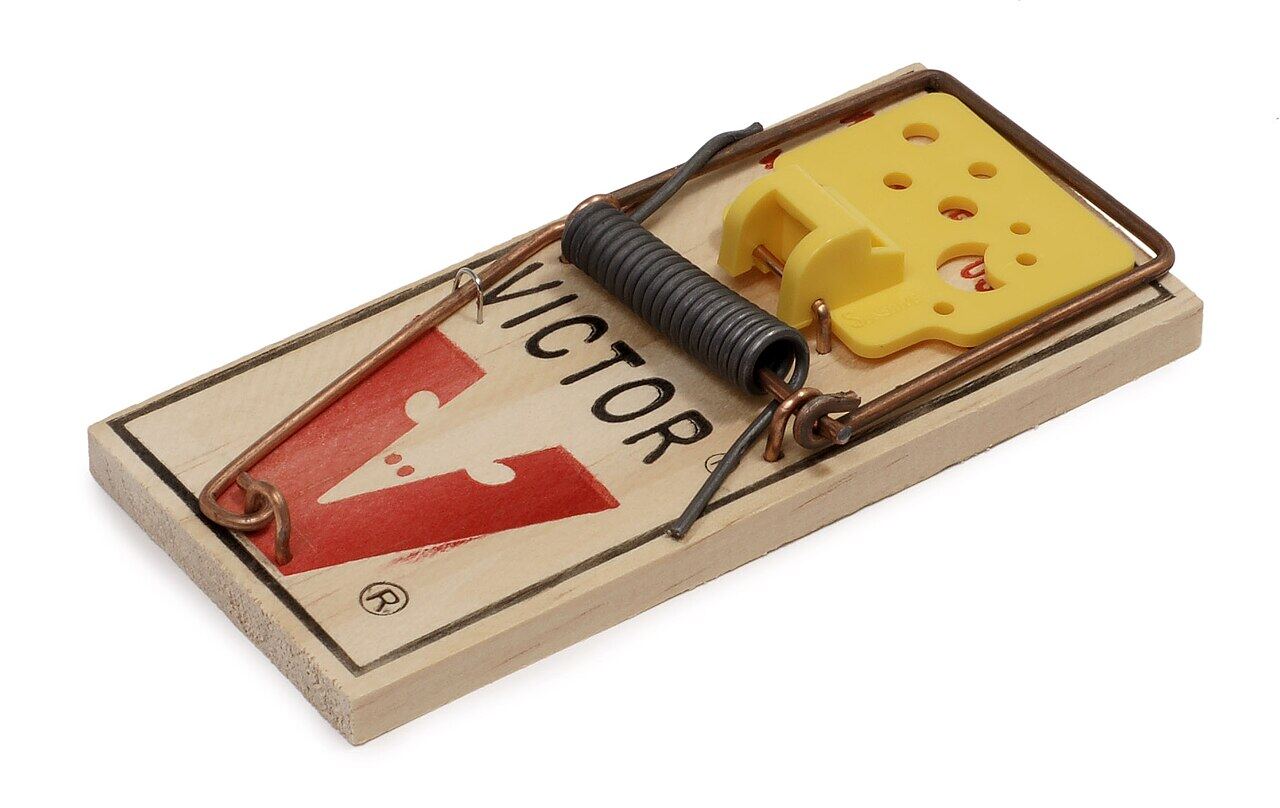
For most homes, plain snap traps work best: rat-sized traps for rats, mouse-sized traps for mice, set along walls and at right angles to the routes rodents travel. Placement matters more than brand. For roof rats, that means up high in the attic; for mice, low along walls every few feet. Bait with what the rodent already eats, and use several traps, not one.
Here's what UF/IFAS's rat and mouse publication says about trap types, baits and placement, applied to Treasure Coast houses.
Snap traps
Snap traps kill quickly, cost little and let you see what you caught. Use the right size: a mouse trap won't reliably hold a rat. UF/IFAS describes enlarged runway snap traps for rats that are triggered when a rat bumps them while traveling. For rats, UF/IFAS also suggests leaving traps baited but unset for several days so rats get past their wariness of new objects, then setting them.
Glue boards
UF/IFAS says glue boards are better suited to mice than rats and are safer around children and pets than some other options. A rat can pull free or drag a glue board. Many people find snap traps more humane because they kill quickly, so glue boards are best kept for mice in spots where a snap trap won't fit.
Baits that work
UF/IFAS lists these baits by rodent:
- Rats and mice: whole nuts, peanuts or peanut butter
- Roof rats: raisins or grapes
- Norway rats: sardines in oil
- Mice: rolled oats, bacon, gumdrops, or a cotton wad they'll want for nesting
Where to put them
UF/IFAS says to set traps at right angles to rat runways, along walls, behind objects and near holes, and to keep them away from children and pets. Indoors, mice need more traps than rats because they range only 10 to 30 feet from the nest. Rats range 100 to 150 feet.
- Roof rats: attic top plates, rafters, ledges and on top of ductwork
- Norway rats: along garage walls, near burrows outside, by the pool equipment
- Mice: every few feet along walls, inside lower cabinets, behind appliances
- Garage: along the walls behind stored items, near chewed bags
How long to give them
UF/IFAS says mice usually approach traps the first night, and if nothing is caught in the first few nights, the trap is probably in the wrong place. Rats may take about a week to approach a trap. So move mouse traps quickly if they aren't producing, and give rat traps more time, especially after pre-baiting.
Bait stations and poison
Consumer rodenticides must come in bait stations that securely contain the poison, and EPA bars the sale of second-generation anticoagulants to general consumers. Loose bait isn't permitted for consumers. Outdoors, bait belongs only in locked, tamper-resistant stations where kids, pets and wildlife can't reach it. Indoors, traps are usually the better choice, because a poisoned rodent can die inside a wall. UF/IFAS notes a dead rat in an inaccessible spot can smell for two to four weeks.
Handling what you catch
Wear rubber or plastic gloves. The CDC says to spray the dead rodent and the trap with disinfectant, let it soak five minutes, then double-bag it and put it in a covered garbage can. A reusable snap trap can be soaked in disinfectant for five minutes, rinsed and dried. The cleanup article has the full steps.
Traps alone won't finish it
Trapping clears out what's inside. If the gaps stay open, new rodents keep coming. Once the catches stop, seal the openings; see rodent exclusion. If traps keep catching for weeks, there's an open entry or a larger population, and it's time for a rodent inspection.
Electronic and live-catch traps
You'll also find battery-powered traps and live-catch traps on store shelves. The UF/IFAS publication cited here doesn't rate them. If you use a live-catch trap, check it often, and know that releasing rats elsewhere just moves the problem to someone else's house. For most homes, snap traps placed well are the simpler choice.
Kids and pets
UF/IFAS says to keep traps away from children and pets. In a home with both, put traps inside a closed cabinet, behind an appliance or in a tamper-resistant trap box, and set attic traps where only adults go. Tell everyone in the house where traps are. If you use any bait station outdoors, it should be locked and tamper-resistant.
How many traps to buy
For mice, buy more than you think: a dozen snap traps for an active kitchen or garage is reasonable, since mice range only 10 to 30 feet from the nest, per UF/IFAS. For rats, several rat-sized traps along each route. Traps are cheap. Under-trapping drags the job out.
Cleaning and reusing traps
Reusable snap traps are fine to use again. The CDC says to soak a trap in disinfectant for five minutes after removing the rodent, then rinse and dry it. Throw out traps that are cracked or caked with blood.
Common questions
What's the best bait for roof rats?
UF/IFAS lists raisins or grapes for roof rats, and nuts or peanut butter for rats of either kind.
How many traps should I set?
Several. For mice, set them every few feet along the walls where you see droppings. For rats, set several along their routes.
Are glue boards OK for rats?
UF/IFAS says they suit mice better. Use rat-sized snap traps for rats.
Can I buy strong rat poison?
Not second-generation anticoagulants; EPA rules bar their sale to general consumers. Consumer bait must come in a station.
Should I pre-bait rat traps?
UF/IFAS suggests leaving rat traps baited but unset for several days so rats get used to them, then setting them.
Keep reading
Sources
- UF/IFAS Extension: Rat and Mouse Control (ENY-224)
- U.S. EPA: Rodent control pesticide safety review
- CDC: How to clean up after rodents
General information only, not legal or medical advice. Rules change, so check the linked sources for the current version.