Roof Rat Control in Port St. Lucie
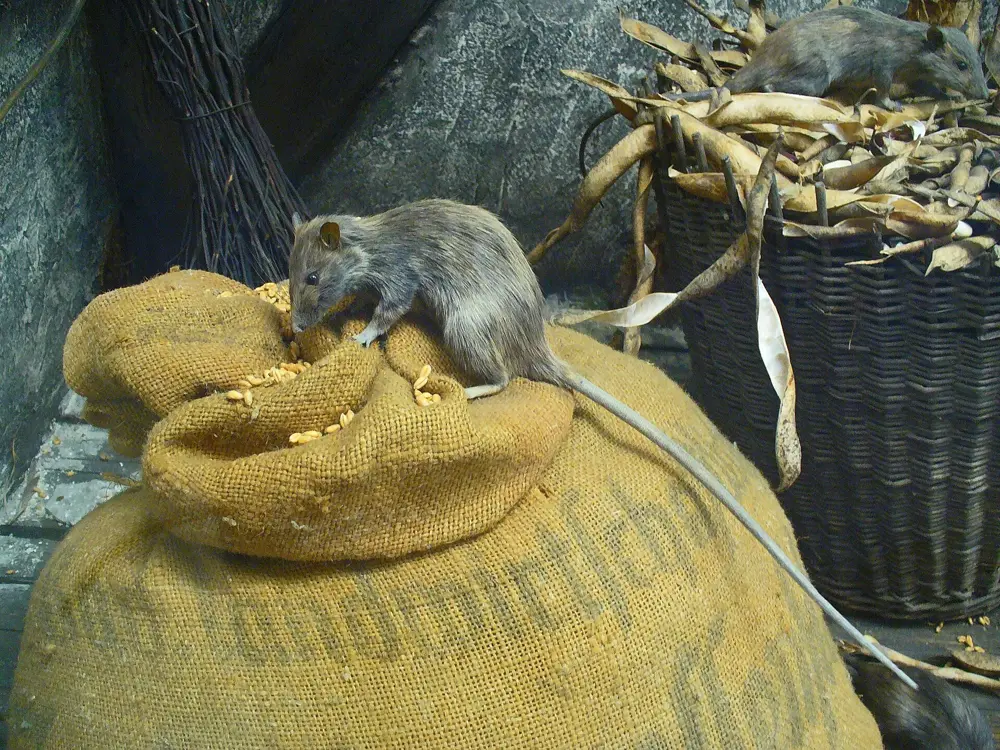
If something runs across your ceiling after dark, this is probably the page you want. The roof rat is a climber. It travels along fences, power lines and tree limbs, and UF/IFAS says it prefers to nest off the ground, in attics, palm trees and thick shrubs. In Port St. Lucie, where nearly every yard has a palm or an oak near the house, it doesn't have far to go.
Roof rats also give themselves away at the fruit tree. UF/IFAS says they prefer fruit, vegetables and grain and are destructive in citrus, living in the trees and gnawing the fruit. An orange or grapefruit with a neat hole and the inside scooped out while it still hangs on the branch is a classic roof rat sign. The article on palms, citrus and roof rats covers the yard side.
How they get into a Florida roof
UF/IFAS says a rat can get through a crack half an inch wide. On a typical Port St. Lucie block home with a wood-framed roof, the usual places are the soffit where it meets the fascia, the corners where two rooflines meet, gable vents with torn screens, the gap around a plumbing vent boot, and the joint where a lanai or screen enclosure frame meets the roof. Rats also jump. UF/IFAS says they can leap 8 feet from a tree to a house when the branch is 15 feet above the roof, so trimming has to leave real distance.
- Soffit and fascia joints, especially at roof corners and returns
- Gable and ridge vents with loose or torn screen
- Where the pool cage or lanai frame meets the roof
- Palm fronds, oak limbs and power lines touching or hanging over the shingles
What a thorough roof rat job includes
The technician should look at the attic and walk the roofline, from the ground and from a ladder. Traps for roof rats go where they travel, which is up high: along the top plates, on rafters, on ledges and on top of ductwork. Openings get closed with metal flashing or hardware cloth. UF/IFAS specifies hardware cloth of 19 gauge or heavier with openings no larger than a quarter inch, and sheet metal of 26 gauge or heavier.
- Attic inspection for droppings, runways, nests and chewed wiring
- Traps on rafters and top plates, checked over several visits
- Sealing at soffits, vents, roof returns and the lanai joint
- Trimming advice for palms, oaks and citrus near the roof
Step by step
A roof rat job usually runs like this:
- Find the active areas in the attic and the gaps outside
- Set traps along the routes the rats use overhead
- Check traps over the next one to two weeks, since rats can be trap-shy at first
- Seal the openings once activity drops, leaving no rats shut inside
- Clean up droppings and nesting, and replace insulation if it's soaked
- Recheck after a stretch of quiet nights
Why roof rats are worse here
Up north, cold weather slows rats down. Port St. Lucie doesn't give them that break. UF/IFAS says a female roof rat can have up to six litters a year, six to eight young each, and is mature at three to five months. A pair that moves into the attic in spring can be a colony by fall.
The yards help them too. Queen palms, coconut palms and sabal palms hold dead fronds where rats nest. Citrus trees are a food supply that ripens through the cooler months. Many older homes have mature oaks reaching over the shingles, and newer streets out west border preserve land and ponds. On every one of those lots, the roof rat lives within a few yards of your soffit. Rodent exclusion is how that ends.
Questions to ask the provider
Two quotes for roof rat work can describe very different jobs. Before you agree to one, ask how many trapping visits are included and what an extra visit costs. Ask for the list of openings they plan to seal and the material for each, and whether the lanai joint and roof returns are on it. Ask whether bait will go anywhere near the house; many providers prefer traps in the attic because a poisoned rat can die in a wall. And ask what the warranty covers if rats get back in, and for how long.
If the provider wants to seal everything on the first day with rats still inside, ask how they'll avoid trapping rats in the attic. A plan that traps first and closes the last opening after activity stops is the safer order.
Common questions
Does a roof rat ever live on the ground?
Sometimes, if there's nowhere better, but UF/IFAS says they prefer to nest off the ground in attics, palms and shrubs.
Should I cut down my palm tree?
Usually not. Trim dead fronds, keep the palm from touching the roof and pick up fallen fruit nearby. That takes away most of the appeal.
How far do roof rats travel for food?
UF/IFAS puts their usual range at 100 to 150 feet from where they nest. The rat in your attic may be eating at a neighbor's fruit tree.
Why is the attic quiet for a few nights after traps go out?
Rats are wary of new objects. UF/IFAS says they may take about a week to approach a trap. Quiet nights early on don't always mean they're gone.
Do roof rats chew wires?
They can. UF/IFAS notes rodents gnaw electrical wires, which can start fires. Have an electrician look at any chewed wiring the technician finds.
Is a palm rat or fruit rat the same thing?
Yes. Palm rat and fruit rat are common Florida names for the roof rat.
Related reading
Serving East Port St. Lucie, St. Lucie West, Tradition, Torino, Sandpiper Bay, River Park, PGA Village Verano, Fort Pierce, Lakewood Park, White City, St. Lucie Village, Hutchinson Island, Jensen Beach, Stuart, Palm City, Hobe Sound, Port Salerno, Sewall's Point, Indiantown, Vero Beach.